
If you own a business in Plano, McKinney, Allen, Celina, Prosper, or Richardson, there is a powerful tool many owners still overlook. It is the return-to-work program.
Injuries happen. What you do next shapes your costs, your culture, and your momentum. A strong return-to-work program helps hurt employees ease back into useful work. At the same time, you control how long claims last. You lower your workers comp costs. And you keep your projects moving.
At Sterling Insurance, we help North Texas businesses bounce back smarter after an injury. Below is a simple blueprint to launch your own program. We will also show you why it pays off.
What Is a Return-to-Work Program?
Before you build one, it helps to know what it actually is. The idea is simple.
A return-to-work program, also called a Modified Duty Program, is a written plan. It brings injured or ill employees back in a limited, safe role. Instead of sending someone home for weeks, you offer tasks that:
- Match the doctor’s restrictions
- Keep the employee active and connected
- Stop the claim from growing out of control
A clear Dallas return to work program turns a stressful event into a smooth process. It gives both sides a path forward.
Why This Matters for Dallas-Area Owners?
The cost difference is bigger than most owners think. Look at both sides.
Without a plan:
- Claims drag on and costs climb
- Employees lose interest or look elsewhere
- You pay more for temp labor or disability benefits
- Your experience mod (EMR) rises, so your premiums rise too
With a plan:
- Fewer lost workdays
- Better morale and retention
- Lower claim costs and premiums over time
- A culture built on care and accountability
Even small wins add up. Bringing someone back a week or two early can slash the total claim cost. This is one of the most useful Richardson workers compensation tips we share with clients.
Step-by-Step | Build Your Back-to-Work Program
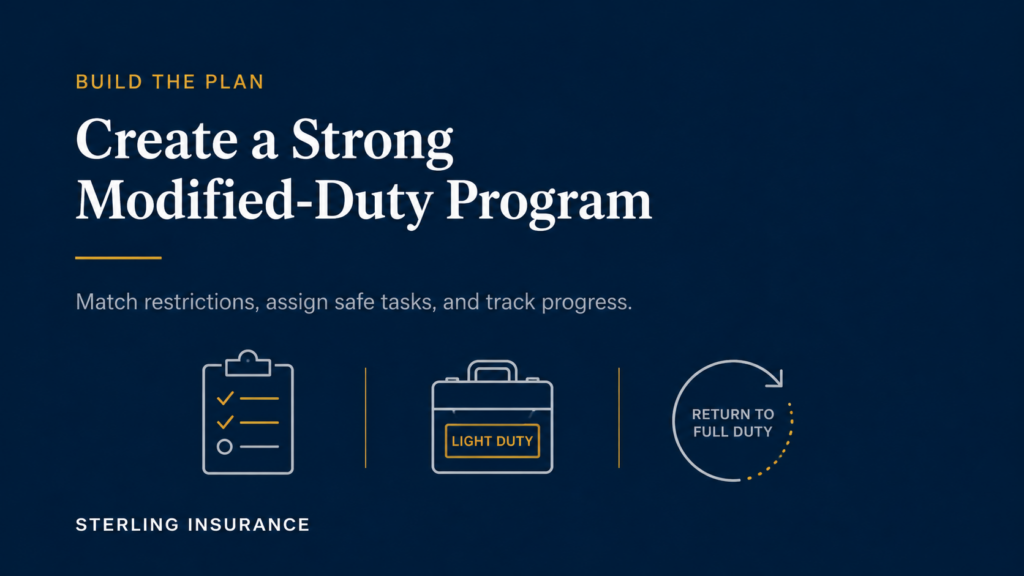
Now let us turn the idea into action. Here is a simple path to follow.
1) Map Common Injuries and Core Tasks
Start with your job descriptions. Then ask three questions. Which tasks are physically hard? Which duties could be safely changed? What injuries have we seen before?
Example: A painter with a shoulder injury cannot roll walls. But they can manage supply lists, update safety logs, or take site photos.
2) Create a “Bank” of Light-Duty Roles
Make a list of safe, useful tasks. These should fit common restrictions. Good options include:
- Inventory counts and sorting materials
- Data entry, filing, and purchasing support
- Answering phones, scheduling, and vendor follow-ups
- Site walkthroughs with no lifting
- Safety inspections and housekeeping
- Tool cleaning or equipment labeling
Tip: You can borrow short-term tasks from other departments. Just keep the work safe and meaningful. Allen light duty jobs like these keep people productive while they heal.
3) Choose Occupational Health Partners Who Support RTW
Pick a nearby clinic that fits your needs. The right one will:
- Write clear restrictions and timelines
- Talk openly with employers
- Understand modified duty
North Texas has many Texas occupational health options. Choose one close to your sites in Plano, Richardson, or McKinney. Build that relationship before you need it.
4) Set Expectations on Day One
Tell your team about the plan early. Your handbook and onboarding should state that:
- The company supports safe, medically approved return-to-work
- Modified duty will be offered when it is available
- Employees are expected to take part once they are cleared
This is not about rushing recovery. It is about staying engaged and paid while healing.
5) Get Written Restrictions After Each Visit
After every doctor visit, ask for a work status report. It should list:
- Limits, such as no lifting over 10 lbs or no overhead reach
- How long the restrictions last
- Follow-up dates
Use this report to match the worker with the right light-duty task.
6) Issue a Written Modified-Duty Offer
Put the offer in writing. Be clear and professional. For example:
“We are offering a temporary modified-duty role performing [tasks] for [hours/week], starting [date]. This assignment follows the medical restrictions from [clinic]. Please sign to acknowledge.”
Have both sides sign it. Then keep it on file.
7) Monitor, Document, and Adjust
Check in every week. Track progress. Stay in touch with the clinic. Be ready to:
- Slowly add more responsibility
- Swap tasks if restrictions change
- Return the worker to full duty once cleared
Good notes protect everyone. They also keep the claim on track. A clear Plano RTW policy makes this easy to follow.
Legal and Insurance Considerations
A few rules keep your program safe and fair. Keep these in mind.
- Make sure modified roles follow ADA and medical guidance
- Do not punish an employee who declines based on real restrictions
- Document every step: restrictions, offers, acceptance, timesheets, and check-ins
Not sure about a detail? Loop in your workers comp carrier or your agent. We will help you handle the fine points.
Dallas-Area Success Snapshot
Real examples show how well this works. Here is one.
A renovation firm in Richardson had a tile installer with a back strain. Instead of sending him home, they acted fast. They worked with an occupational clinic. They placed him on estimating prep and material staging. They kept him on the schedule.
The result was strong morale and a faster recovery. The claim cost dropped a lot. And the firm saw EMR improvement the next year.
Common RTW Myths (and the Truth)
Many owners hold back because of false beliefs. Let us clear them up.
- Myth: “We don’t have any light-duty work.” Truth: Every business has admin, safety, or planning tasks that matter.
- Myth: “This will create more paperwork.” Truth: A clean process cuts claim management time over the long run.
- Myth: “Employees won’t want it.” Truth: Most people prefer to work, stay connected, and keep earning.
How Sterling Insurance Helps?
You do not have to build this alone. We are here to guide you.
We partner with Dallas-area businesses to:
- Review your workers comp Dallas policy and align benefits with your goals
- Map roles to common restrictions and build your light-duty task bank
- Connect you with clinics that support early, safe return
- Provide sample forms, like work status requests and modified-duty offers
- Share carrier risk-control resources that boost your safety culture
Our goal is simple. A safer workplace. Lower claim costs. And a healthier EMR. Solid Celina risk management starts here. And the right Dallas small business insurance plan makes the whole system stronger.
Final Word
A strong return-to-work program is more than a cost saver. It shows your team you will care for them. It also keeps the business moving when injuries happen.
That mix of care and discipline builds trust. It reduces downtime. And it helps your premiums trend the right way. McKinney modified duty done well protects both your people and your bottom line. Over time, a steady Prosper EMR reduction is one of the biggest rewards of getting this right.
Ready to put a simple, durable RTW plan in place?
Connect with Sterling Insurance for a quick Return-to-Work startup kit and a workers comp review tailored to Plano, McKinney, Allen, Celina, Prosper, and Richardson.
Phone: (972) 964-4825
Email: info@sterlinginsnow.com
Website: https://www.sterlinginsnow.com/
Frequently Asked Questions (FAQs)
1. What is a return-to-work program in simple terms?
It is a written plan that brings injured workers back to safe, limited duties. The tasks match the doctor’s restrictions. This keeps the employee active and lowers your claim costs.
2. Do I really have light-duty work to offer?
Yes, almost every business does. Think about admin, filing, inventory, scheduling, or safety checks. These tasks are useful and fit most medical limits.
3. How does a return-to-work program lower my insurance costs?
It shortens how long claims stay open. Shorter claims cost less. Lower claim costs help reduce your experience mod, which can lower your premiums over time.
4. Can an employee refuse modified duty?
They can decline if it conflicts with real medical restrictions. You should never punish them for that. But if a doctor clears them, you can expect them to take part.
5. What paperwork should I keep?
Keep the work status reports, the written duty offers, signed acknowledgments, timesheets, and your weekly check-in notes. Good records protect both you and your employee.